

Robot News Pack Acceptance: Explain Each Link Purpose
2026-11-02
Robot News Pack Acceptance: Explain Each Link Purpose
Link purpose should be understandable in a robotics news pack before a reader follows a source reference. A supplier may deliver a useful collection of links while using wording that leaves readers uncertain about what each destination contains. An editorial buyer should ask whether the handover supports the intended reading task. This article proposes that acceptance review. It evaluates no actual news pack and verifies no robot announcement.
Identify the reader’s destination question
Ask what the reader is expected to find after following a link. It might be a primary announcement, a supporting document, or editorial background. Those roles should be distinguishable in the delivered context rather than inferred from identical read more labels.
The receiving editor should identify the page revision being accepted and the specific source relationships it presents. A list of addresses can support link inventory, but it does not necessarily explain the role of each destination in the story. Keep those two delivery tasks separate. Ask the author how a reader returning to the pack later will recognize the same destination purpose without relying on an editor’s memory.
For a proposed review, prepare a question beside each type of destination: what should a reader expect here, and how does the wording communicate that expectation? No real product release or source claim is supplied in this article. The examples remain organizational questions rather than fabricated reporting.
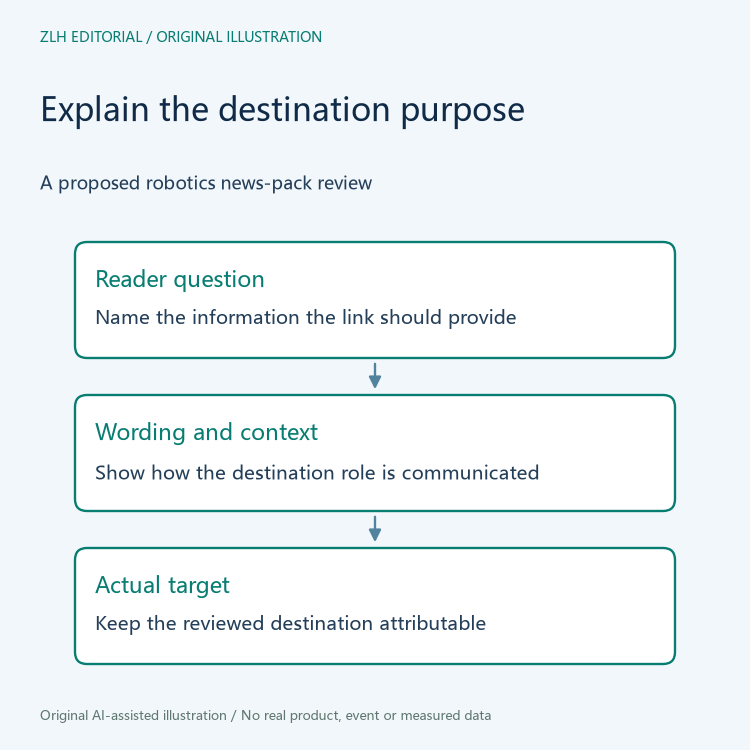
Review the wording with its available context
The WCAG explanation of Link Purpose in Context describes determining a link’s purpose from its text alone or from text together with programmatically determined context, with the stated exception for generally ambiguous purposes. A reviewer should assess the actual delivered context, not only an isolated string.
Ask the supplier which surrounding information provides that context and how it is associated with the link. A visual arrangement may suggest a relationship without explaining what the implementation makes available. The acceptance record should identify the evidence it actually examined.
Do not require every label to become a long sentence. The goal is an understandable destination purpose. A concise phrase can be useful when it accurately describes the intended material and does not rely on a relationship that the page fails to provide.
Keep the destination description accurate
The W3C WAI writing tips recommend meaningful link text that describes the target content and avoids ambiguous phrases. They also discuss useful destination information. This supports a concrete editorial question: does the label tell readers what they are choosing to open?
Ask whether a label promises a document, an announcement, or a broader page. The wording should not imply that an official primary source has been verified if the destination is actually an intermediary summary. Clear navigation needs the correct source role as well as readable prose.
This article supplies no file sizes, document types, or actual destination observations. Such details should come from the real material when the editorial task needs them. Inventing a precise-looking label would undermine the source relationship the review is intended to clarify.
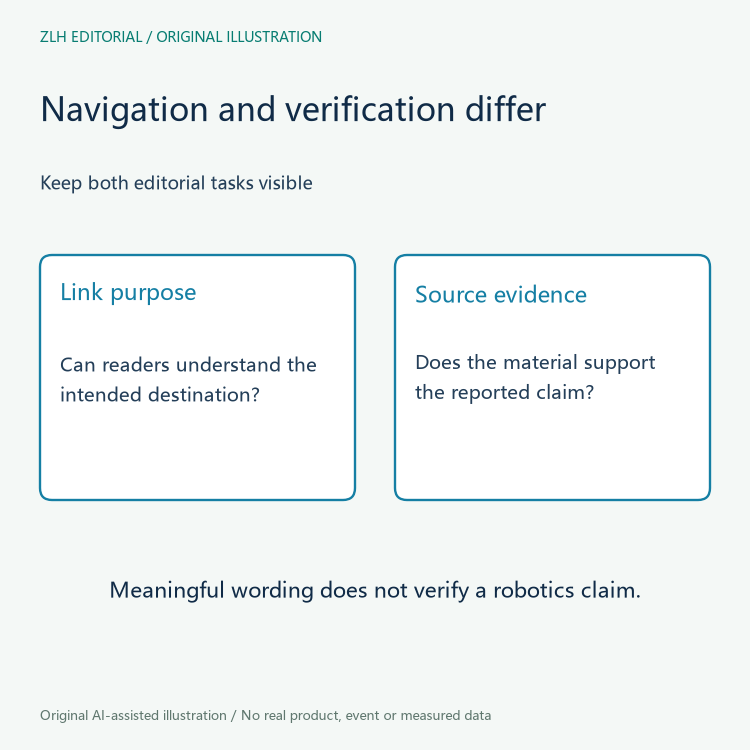
Separate navigation checks from factual verification
A reader being able to understand a link does not establish that the linked claim is accurate, current, or relevant to the story. The editorial team still needs to examine the source and its scope. Link wording can make that work easier without replacing it.
Likewise, a technically available destination may not serve the promised purpose. A later authorized review should identify the actual target and observation rather than close the task merely because a page opened. Keep the destination’s role attached to the claim it is meant to support.
If the source moves or the story is revised, ask whether the wording still describes the destination. Preserve earlier observations with their page revision. An unchanged visible label should not silently carry an earlier source-check result to a different target.
Accept a source path another editor can follow
The handover should connect the reader’s question, the link wording, the available context, and the intended destination role. It can keep unresolved links as open items. This gives the supplier a focused correction request rather than a vague instruction to improve navigation.
Ask who maintains those source relationships after publication. A news pack may be copied into several presentations, and each copy should retain the relevant context. The acceptance discussion should distinguish the reviewed edition from later copies that have not yet been examined.
More editorial notes appear in our robotics news section and the article directory. Both original illustrations contain no real announcement, downloaded document, link-audit result, accessibility score, or completed fact-check.


